
A maintenance technician reaches into a jammed conveyor belt. The machine hasn’t been powered down properly—no lock, no tag, no verification. Seconds later, a co-worker restarts the line remotely. The result: catastrophic injury. This isn’t hypothetical. It happens more than anyone admits.
The lockout tagout (LOTO) process exists to prevent exactly this kind of tragedy. And when companies implement LOTO, one name consistently earns trust: Master Lock. More than just padlocks with bright yellow tags, Master Lock’s lockout solutions are engineered systems—designed for real-world complexity, human error, and regulatory scrutiny.
This article cuts through the marketing. We’ll examine why Master Lock dominates industrial LOTO programs, how their products address real workflow challenges, and where they deliver (or fall short) in high-stakes environments.
Why Master Lock Leads in Lockout Tagout Programs
Master Lock didn’t become synonymous with LOTO by accident. Their dominance comes from decades of refining products based on actual field use—not just compliance checklists. OSHA’s 29 CFR 1910.147 sets the baseline, but real safety demands more: durability, simplicity, visibility, and scalability.
Master Lock delivers across all four.
Their padlocks, hasps, tags, and kits are built to survive factory floors drenched in oil, exposed to UV, or frozen in outdoor winter conditions. Unlike off-brand alternatives that crack or corrode, Master Lock uses reinforced polymer shells, stainless steel mechanisms, and weather-resistant labels.
But durability is only half the story.
The real power lies in standardization. A plant using Master Lock across departments creates visual consistency. Workers instantly recognize lockout devices. Supervisors verify compliance at a glance. Auditors see uniformity. That’s not just safety—it’s operational efficiency.
“We switched to Master Lock across all three facilities. First year, lockout violations dropped 68%. Not because people suddenly cared more—but because the tools worked better.” — Plant Safety Manager, Midwest manufacturing hub
Core Components of Master Lock LOTO Systems
Master Lock doesn’t sell one-size-fits-all solutions. Their ecosystem includes dedicated tools for different energy types and access points. Understanding these components is critical to proper implementation.
Padlocks and Keys
Master Lock padlocks are the backbone of any LOTO program. Key features:
- Unique keying options: From keyed-alike to keyed-different, Master Lock allows granular control over access.
- Breakaway lanyards: Designed to snap under pressure, reducing risk during emergencies.
- High-visibility colors: Red bodies with yellow tags are standard, but color-coding by department or energy type is supported.
- Shackle materials: Nylon-coated steel, stainless steel, or brass—chosen based on environment (e.g., brass for explosive atmospheres).
Their 469 Series is a bestseller: a 1-1/2” laminated steel padlock with a vinyl-coated steel shackle, built to resist sawing, pulling, and corrosion.
Lockout Hasps and Devices
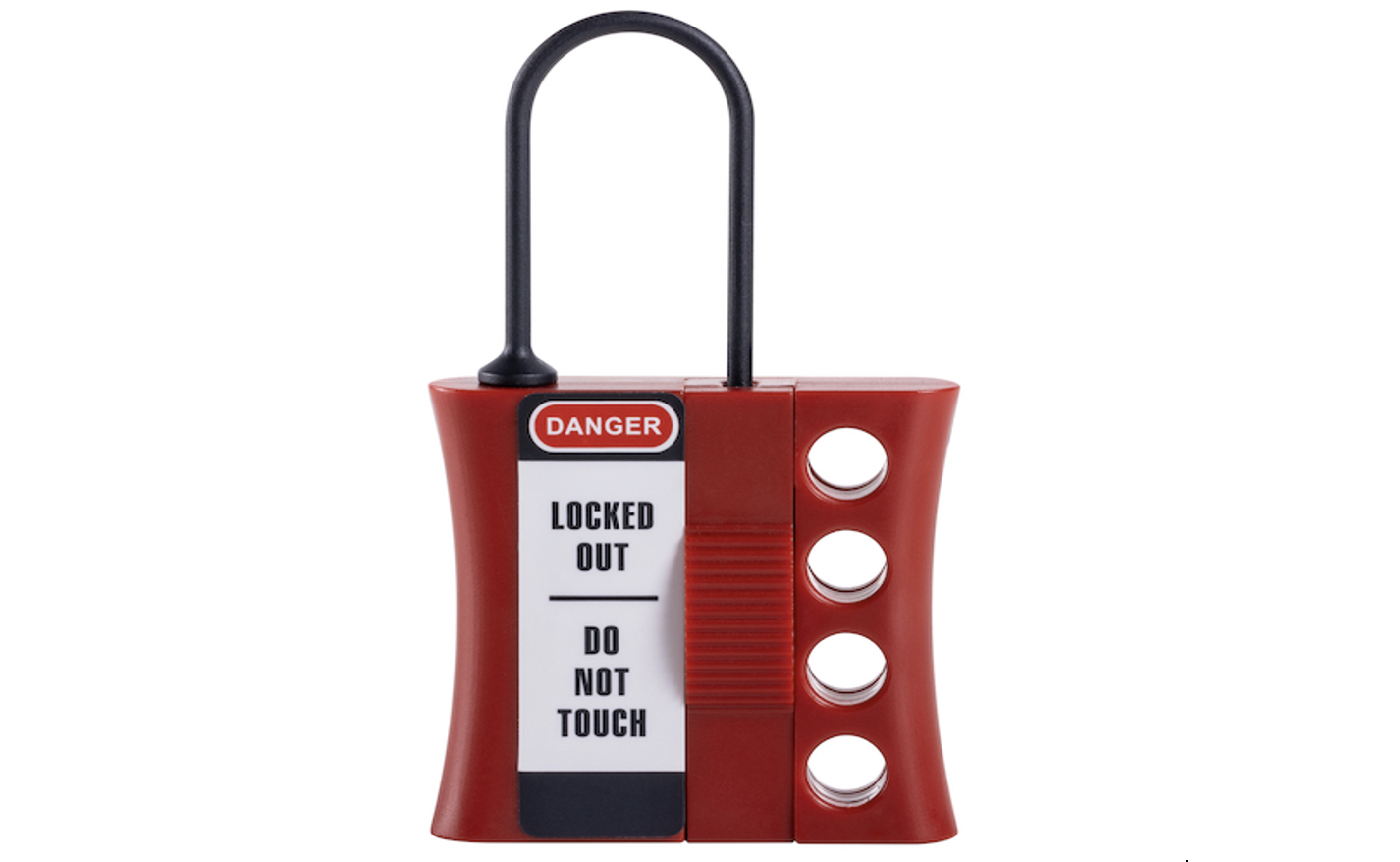
Hasps extend lockout capability to multiple workers or multiple control points. The Master Lock 1150 model is a staple: a reusable, insulated hasp that allows up to six locks to secure a single disconnect.
For specialized equipment, Master Lock offers:
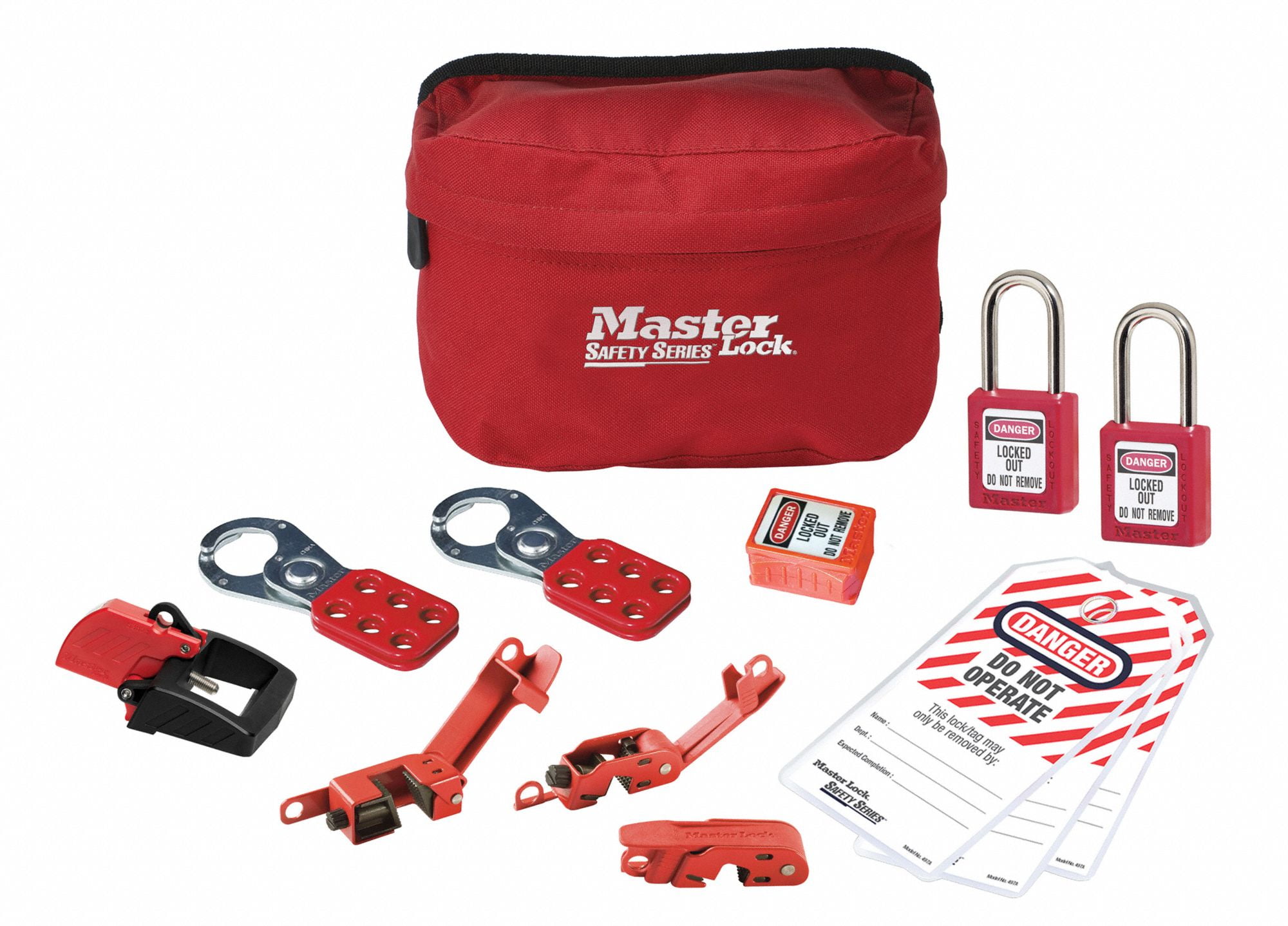
- Valve lockouts (e.g., 1221 for ball valves)
- Circuit breaker lockouts (e.g., 2850 for tandem breakers)
- Plug-in lockouts (e.g., 4640 for electrical cords)
- Pneumatic and hydraulic lockouts
Each is designed for a specific interface—ensuring a secure fit that can’t be bypassed with tape or zip ties.
Tags and Communication Tools
A lock without a tag is incomplete. Master Lock’s LOTO tags are tamper-resistant, weatherproof, and include standardized fields:
- Employee name
- Department
- Date and time of lockout
- Reason for lockout
- Emergency contact
They also offer write-on, pre-printed, and even digital tag options in some kits. The goal: eliminate ambiguity. If a worker sees a tag, they know not just that a machine is locked, but why, who, and when.
Common LOTO Mistakes—and How Master Lock Helps Prevent Them
Even with procedures in place, human error derails LOTO programs. Master Lock’s design directly addresses the most frequent failures.
Mistake 1: Incomplete Energy Isolation
Technicians often lock the main switch but forget secondary energy sources—hydraulic lines, stored pressure, or capacitors.
Solution: Master Lock’s energy-specific lockouts (like the 2870 capacitor discharge lockout) force workers to acknowledge and isolate non-electrical hazards.
Mistake 2: Group Lockout Confusion
In team maintenance, multiple workers apply locks. Without clear coordination, someone may remove a lock prematurely.
Solution: Master Lock’s group lockout stations (e.g., 1690) use a central hasp where each technician applies their personal lock. The equipment stays locked until every individual removes their lock—no exceptions.
Mistake 3: Tag Illegibility or Loss
Paper tags fade, tear, or get lost. Workers ignore them if they’re hard to read.
Solution: Master Lock’s tags use UV-resistant ink and durable polypropylene material. Their 1701 series includes writable surfaces that resist smudging—even with oily gloves.
Mistake 4: Using Personal Locks for Shared Equipment
Workers sometimes use personal locks not designed for industrial LOTO, risking failure under stress.
Solution: Master Lock’s "safety-only" padlocks are keyed differently from standard hardware-store models. They’re also smaller (1” shackle) to prevent use outside LOTO—reinforcing policy through design.
Master Lock LOTO Kits: Practical Options for Real Workflows For companies building or upgrading LOTO programs, kits offer a fast, compliant start. Master Lock provides tailored sets based on industry and risk profile.
Here are five top-performing kits and their ideal use cases:
| Kit Model | Best For | Key Components | Unique Advantage |
|---|---|---|---|
| 1801MAT | General manufacturing | 10 padlocks, hasps, tags, breakers | All-in-one starter kit; includes training guide |
| 1941MAT | Electrical maintenance | Insulated breaker lockouts, plug locks | Designed for high-voltage panels |
| 2000MAT | Multi-trade facilities | Valves, breakers, plugs, pneumatic | Covers 5+ energy types |
| 1690 | Group maintenance | Group hasp, 6 locks, log sheet | Enforces team verification |
| 5111DL | Digital integration | Bluetooth lock, mobile tagging | Logs lockout events to cloud |
Each kit follows OSHA guidelines but goes further—addressing workflow friction. The 1801MAT, for example, includes a laminated checklist, reducing training overhead. The 5111DL integrates with CMMS systems, creating an audit trail without paperwork.
Pro Tip: Rotate kit contents annually. Even durable tags degrade. Replace padlocks showing shackle wear. Master Lock offers refills—don’t rebuild from scratch.
Limitations and Real-World Trade-Offs
Master Lock sets the standard, but no system is flawless.
Cost vs. Longevity
Master Lock products cost more upfront than generic brands. A 469 padlock runs $25–$30. A no-name version might be $8. But in a high-cycle environment, the cheap lock fails in 12 months. Master Lock lasts 5+ years. The math favors investment.
Bulk and Flexibility
Some users report Master Lock devices are bulkier than competitors. The 2850 circuit breaker lockout, for instance, doesn’t fit tightly packed panels. In dense electrical rooms, this can be a real constraint.
Workaround: Use mini-breaker lockouts (e.g., 2840) or customize with compact hasps.
Training Dependency
Master Lock’s strength—comprehensive design—can backfire without training. A new technician might not realize that a valve lockout must be paired with a tag, or that a group hasp requires full team clearance.
Bottom line: Tools don’t replace training. They amplify it.
Implementing Master Lock LOTO: A 5-Step Workflow
Adopting Master Lock isn’t a one-time purchase. It’s a process. Follow this sequence for real results:
- Audit Energy Sources
- Map every machine and its energy inputs (electrical, pneumatic, chemical, etc.). Use Master Lock’s equipment guide to match lockout types.
- Select Core Kits
- Start with one general kit (e.g., 1801MAT) and one specialized kit (e.g., 1941MAT for electrical). Scale based on department needs.
- Standardize Lock Colors and Keys
- Assign colors by department: red for maintenance, blue for operations. Use keyed-different locks to prevent cross-use.
- Train and Drill
- Conduct live lockout drills quarterly. Use Master Lock’s training tags to simulate real scenarios.
- Audit and Replace
- Inspect locks monthly. Replace damaged tags, worn shackles, or faded labels. Maintain a log.
Master Lock vs. Competitors: Who Wins for Industrial Use?
While Brady, Honeywell, and Grainger offer LOTO tools, Master Lock stands apart in usability and ecosystem depth.
| Feature | Master Lock | Brady | Honeywell |
|---|---|---|---|
| Product range | 500+ SKUs | 600+ | 300+ |
| Durability testing | MIL-STD rated | Industrial grade | Commercial grade |
| Color standardization | Industry default | Custom options | Limited |
| Kit usability | Plug-and-play | Modular | Complex |
| Price (mid-tier padlock) | $28 | $32 | $25 |
Verdict: Master Lock wins on balance. Not the cheapest, not the most feature-packed, but the most reliable across industries. Brady offers more customization but at the cost of simplicity. Honeywell is cost-competitive but lacks Master Lock’s field-proven reputation.
For most plants, Master Lock delivers the best blend of compliance, durability, and ease of use.
Closing: Elevate Your LOTO Program with Intention
Lockout tagout isn’t a compliance box to check. It’s a culture of safety—enforced by tools that work when lives depend on them.
Master Lock doesn’t eliminate human error. But it reduces the impact of it. Their locks hold. Their tags last. Their systems scale.
Start with the right kit. Train with realism. Audit with rigor. And choose equipment that workers trust—not because it’s branded, but because it works.
Equip your team with more than policy. Give them something they can hold in their hand, lock into place, and know it won’t fail.
That’s the real value of a Master Lock.
FAQ
What is the most durable Master Lock LOTO padlock? The 469 Series, made with laminated steel and a vinyl-coated shackle, offers the best durability for industrial use.
Can Master Lock LOTO tags be reused? Yes, their polypropylene tags are designed for multiple uses with wipeable surfaces.
Do Master Lock kits meet OSHA 1910.147 requirements? Yes, all Master Lock LOTO kits are designed to align with OSHA standards for energy control.
How many locks can be used with a Master Lock group hasp? Models like the 1150 and 1690 support up to six individual locks for group lockout procedures.
Are Master Lock LOTO products suitable for outdoor use? Yes, stainless steel and UV-resistant materials make them effective in outdoor or harsh environments.
Can I integrate Master Lock with digital safety systems? Yes, the 5111DL Bluetooth lock supports cloud logging and integration with maintenance management software.
What’s the difference between lockout and tagout? Lockout physically prevents energy release (e.g., a padlock). Tagout provides warning information. Both are required for full compliance.


